%20(1).webp)

What is it really like to travel to Antarctica in March? For some, visiting the White Continent at the end of the Antarctic season may not be a first option. There’s a common belief that March in Antarctica means less snow, less ice, less wildlife, and fewer hours of daylight. Reality is richer than myth.
After 23 years of Antarctic expeditions across every stage of the season, at Antarctica21, we can confidently say that March has a magic of its own. In March 2025, Brigitte Lämmle, Antarctica21’s Sales and Marketing Director, traveled to the continent and experienced it firsthand. Here, she shares her perspective and helps debunk some of the most common misconceptions about visiting Antarctica at this time of year.
The Misconceptions of Antarctica in March
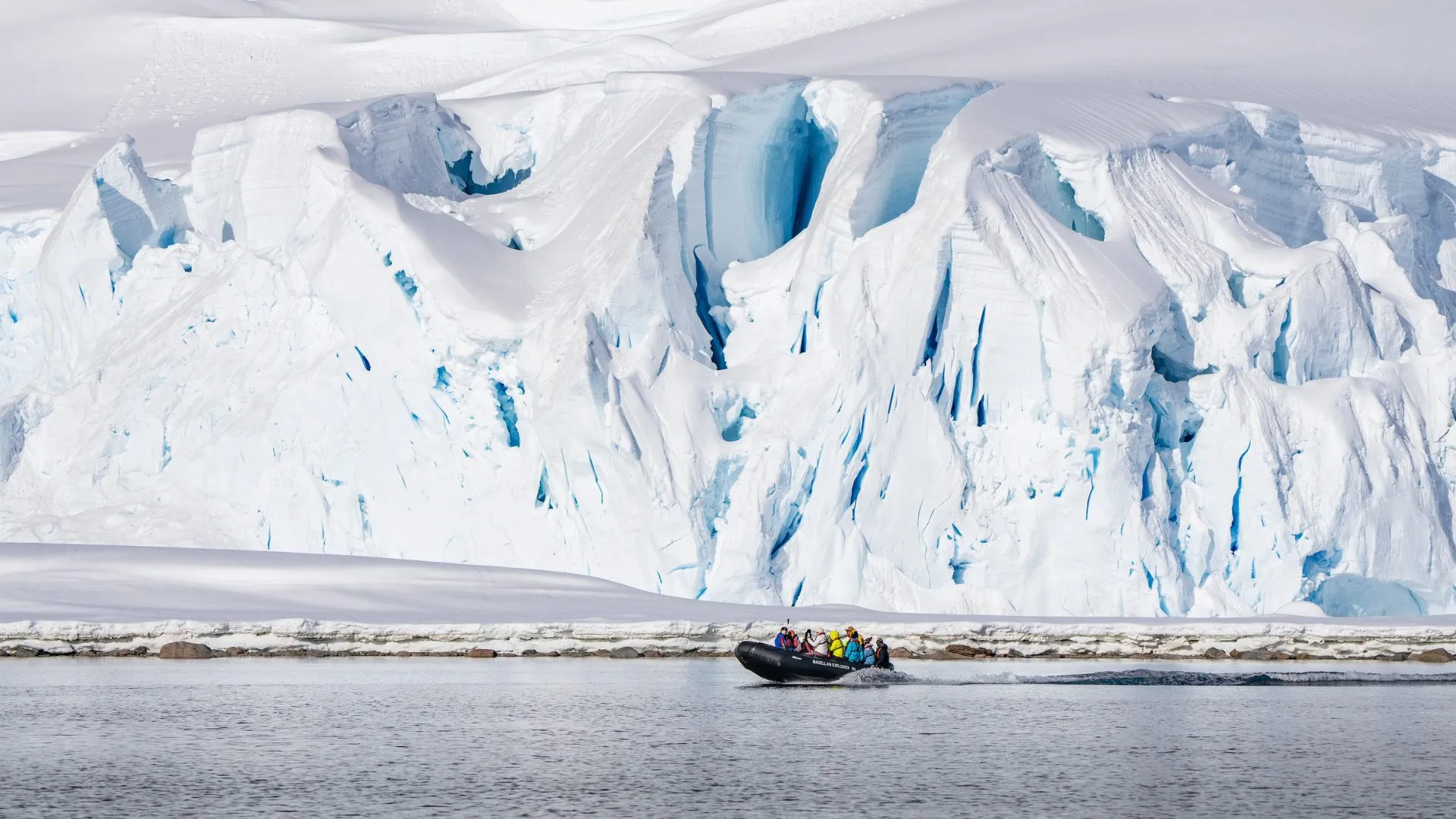
“I think one of the misconceptions is that late in the season, maybe the scenery doesn't look as Antarctic anymore because there’s less snow, less ice, but I actually couldn’t spot any difference between the other times I traveled. For example, in December versus the first week of March, there’s still plenty of snow, plenty of ice. Of course, it varies depending on the places visited, but that’s exactly what our Expedition team does, they always strive to take travelers to the best available locations. Considering the weather and sea conditions, they bring you to those places where we can do and see a lot of things”, Brigitte says.
“In March, we visited spectacular sites, we had a lot of snow, and we saw incredible ice formations both on land and at sea. I remember one Zodiac drive we spent two hours exploring and cruising around, and spotted an incredibly huge arch of ice floating on the water. That was one of the most magical things I have experienced in Antarctica.”
Another misconception about traveling in Antarctica in March, is that there might not be as many wildlife encounters as other times of the season. About it, Brigitte says there was “such an incredible amount of wildlife encounters, especially with whales, which I had never experienced before. We also saw plenty of penguins, seals, and birds, so there’s actually plenty of wildlife. I think there are even more opportunities to encounter whales close by at the end of the season in March than at the beginning of the season."
.webp)
Weather and daylight are two of the main concerns when traveling to Antarctica in March. During this month, the average temperature is -1°C to 1°C. If you compare February (0°C to 2°C), or January (0°C to 3°C), you realize there’s not such a big difference.
In March, daylight runs between 14 and 16 hours on average. About it, Brigitte says that “you do experience night, which may not be the case in December. But March gives you something else: sunsets. You wouldn’t get them when you have 20 to 22 hours of daylight. So, you get sunsets, or you get those extended golden hours that are magical and provide this special lightning, especially attractive I think for photography. This makes March an attractive time of the year for photographers.”
%20(1).webp)
Why These Misconceptions Persist?
According to our Sales and Marketing Director, these misconceptions persist because there’s a lack of information about visiting Antarctica in March. She also believes that “there’s a wealth of available departures during the prime season, but not that much going later in the season. That's something we've been actively changing in recent years, extending into the full Antarctic season, which has given us new experiences and new insights.
And there’s a quiet reward for those who choose to go early or late in the season: Antarctica on a more intimate scale, with fewer ships and fewer travelers in the area.”
March is for quiet explorers. The ones who want to see the Antarctic summer fade gracefully into autumn, a final glimpse before the ice closes once more. The sense of solitude is profound. When standing on shore, the silence is almost complete, broken only by the crack of distant ice or the exhale of a passing whale. It is a time for those who seek a deeper emotional connection with Antarctica, when the continent feels raw, authentic, and eternal.
.webp)
March: Best Time to Visit Patagonia
If you’re joining a Classic Antarctica Air-Cruise departure in March, it’s also the best time to visit Southern Patagonia. “If you’re able to do a pre or post-trip in the area, go to Torres del Paine, go to some place in South Patagonia, because the autumn, our Patagonian fall, is the best time to visit.”
From October to March, the Seventh Continent offers unique wildlife moments and stunning landscapes to discover. Each month promises life-changing adventures amidst Antarctica’s dynamic scenery. Discover what’s the best time for you to go visit Antarctica, in our When to Travel to Antarctica digital guide, a month-by-month travel guide with expert insights so you can choose the best time for your journey.
.avif)
.png)
.jpg)
.jpg)
Experience the Extraordinary
From dramatic landscapes to close wildlife encounters, every journey to the White Continent is unique. Let's start planning yours together.

Stay In Touch With Antarctica
Subscribe to be the first to know about new season launches, early booking promotions, brochures, future contests, and more.

